


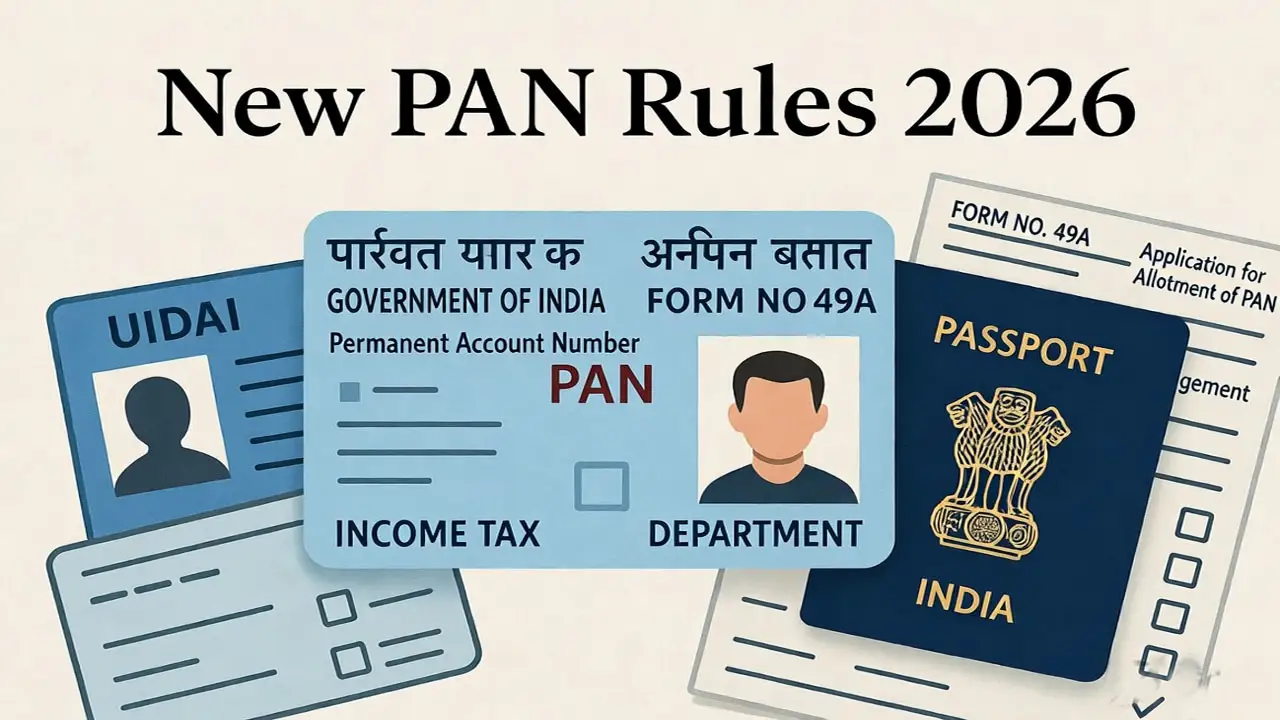
India’s Permanent Account Number (PAN) system is undergoing its most significant overhaul in years. The Income Tax Department has announced a comprehensive overhaul of PAN rules, effective April 1, 2026, introducing stricter documentation requirements, updated transaction thresholds, and mandatory name alignment with Aadhaar data. Here is everything you need to know before the deadline arrives.
The End of Aadhaar-Only Applications
The single biggest change is the removal of the simplified one-document process. Until March 31, 2026, applicants can complete PAN applications using only Aadhaar. From April 1, 2026, applicants will need to submit additional documents including voter ID, passport, birth certificate, and more.
Also Read



This change is part of the draft Income Tax Rules 2026 and aims to tighten identity verification and reduce errors or misuse in PAN issuance. For years, the single-Aadhaar route made PAN accessible in minutes, but authorities determined this convenience came at the cost of verification quality, paving the way for duplicate or fraudulent PANs.
New Documents Required from April 1, 2026

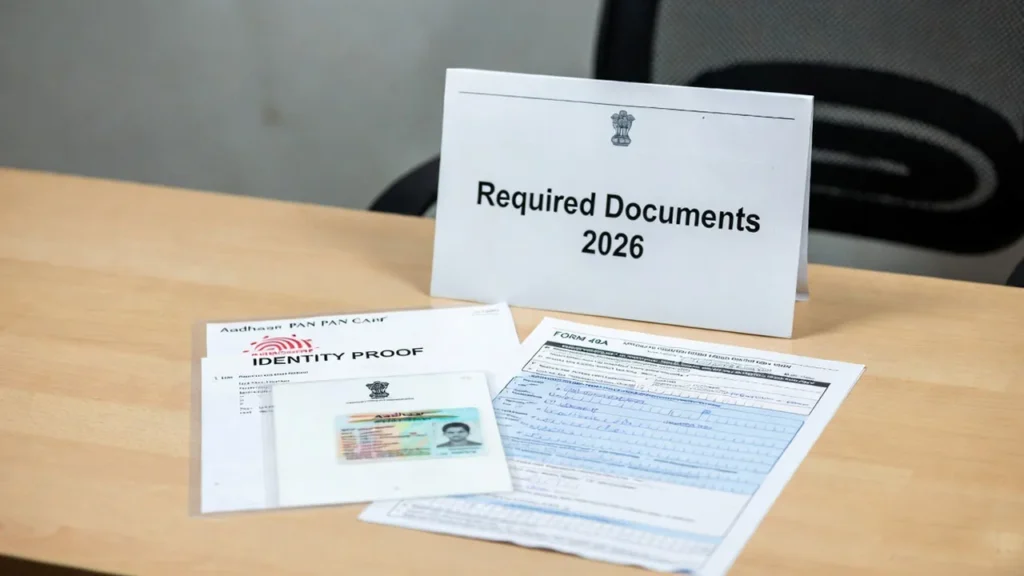
Starting April 1, all new applicants will be required to provide a separate proof of Date of Birth (DOB). Valid documents for this purpose include birth certificates, voter IDs, matriculation certificates, driving licences, passports, or magistrate-signed affidavits.
In practical terms, applicants will now need to furnish documents across three categories:
Proof of Identity: Aadhaar card, passport, voter ID, or driving licence.
Proof of Date of Birth (mandatory and new): Birth certificate, Class 10 marksheet/matriculation certificate, passport, voter ID card, or an affidavit issued by a magistrate.
Proof of Address: Aadhaar, passport, voter ID, or driving licence.
This marks a shift from the existing simplified process where Aadhaar could be used as the sole document for application until March 31, 2026.The DOB proof requirement is the most critical new addition — applicants who previously relied on Aadhaar alone must now ensure they have a valid supporting document ready.
New PAN Application Forms: 93, 94 & 95

Alongside the documentation changes, the application forms themselves are being replaced entirely. The PAN application for Indian citizens and companies, previously known as Form 49A, has been redesignated as Form 93. The PAN application for non-residents and other entities, previously called Form 49AA, has now been redesignated as Form 95.
A new Form 94 has also been introduced as part of the restructured framework for specific categories of applicants.
From April 1, 2026, the Income Tax Department will only accept the new PAN application forms. Requests submitted using old forms will not be processed, requiring organisations and individuals to update their internal procedures.
Any PAN applications pending as of March 31, 2026, will remain valid — you do not need to submit a fresh application under the new rules.However, any application filed on or after April 1 must use the new forms, available through Protean (formerly NSDL eGov), UTIITSL, or the Income Tax Department’s e-filing portal.
Name on PAN Card Must Match Aadhaar — No Exceptions
One of the more sweeping changes affects how your name appears on the PAN card itself. Only names that match the Aadhaar card will be printed on the PAN card. CSC has clearly stated that applicants are urged to verify their Aadhaar details before applying, as any spelling mistakes or outdated names on Aadhaar could create problems once the new rules take effect.
The Income Tax Department will remove the “Name on Card” customisation option. From the new financial year, the name printed on the PAN card must exactly match the data stored in the Aadhaar database. This alignment is intended to streamline the verification process and ensure consistency across all government-issued digital identities.
This means that if your Aadhaar carries a shortened name, an old spelling, or lacks a surname, your PAN will reflect that exactly. Correcting Aadhaar details before April 1 is strongly advisable.
Revised Thresholds for Mandatory PAN Quoting in Transactions
The new rules also raise the bar on when PAN must be quoted during financial transactions, bringing relief for routine activities while tightening compliance for large cash movements. The 2026 rules increase thresholds for mandatory PAN quoting in high-value transactions as follows: cash deposits or withdrawals require PAN if the total in a financial year reaches ₹10 lakh or more, compared to the old rule of ₹50,000 per day. For motor vehicles including motorcycles, PAN is required if the price exceeds ₹5 lakh, where earlier it applied to all vehicles. Hotel, restaurant, convention, or event payments require PAN only if payment exceeds ₹1 lakh, up from ₹50,000. Immovable property transactions require PAN if the transaction exceeds ₹20 lakh, compared to ₹10 lakh previously.
PAN is now compulsory for all new insurance policies, regardless of the premium amount. This is a notable tightening in the insurance sector, where previously a threshold of ₹50,000 in annual premium applied.
Where to Apply
Applicants can apply for a new PAN through the portals of Protean (formerly NSDL eGov), UTI Infrastructure Technology and Services Limited (UTIITSL), or via the Income Tax Department’s e-filing portal. A word of caution: the government has highlighted that fraudsters are practising scams by sending “download e-PAN card online”-related emails to users and has warned citizens not to respond to any emails, links, calls, or SMS asking them to share financial and sensitive information.
What Existing PAN Holders Need to Do
Your existing PAN card does not become invalid on April 1, 2026. However, under the new PAN card rules 2026, your details must match Aadhaar to avoid issues with tax filings, banking transactions, and other regulated financial activities.
The immediate priority checklist is simple: verify that your name, date of birth, and address on Aadhaar are accurate; if corrections are needed, make them before March 31; and if you intend to apply for a new PAN or update an existing one, gather your DOB proof documents now.
With the new Income Tax Act, 2025 coming into effect from April 1, 2026, PAN is being positioned as a key identifier across major financial transactions, with the focus on clearly defining where PAN must be quoted so that high-value activities are easier to track and report. In short, PAN is no longer just a tax document — it is the cornerstone of India’s financial identity infrastructure, and these April 2026 changes mark a significant step in that direction.
| IF You Satisfied By www.NewJobVacancy.co.in Please Join Our WhatsApp & Telegram Channel (Thanks). | |
| Join Our WhatsApp Channel | Follow Now |
| Join Our Telegram Channel | Follow Now |
IMPORTANT LINKS
| PAN Card New from | Click Here |
| PAN Card Correction New from | Click Here |
| Official Website | Click Here |
| Home Page | Click Here |